The service
The Divine Liturgy
A Coptic service lasts longer, sounds different and smells different from what many people know. Here is what to expect, so you can come without hesitation.
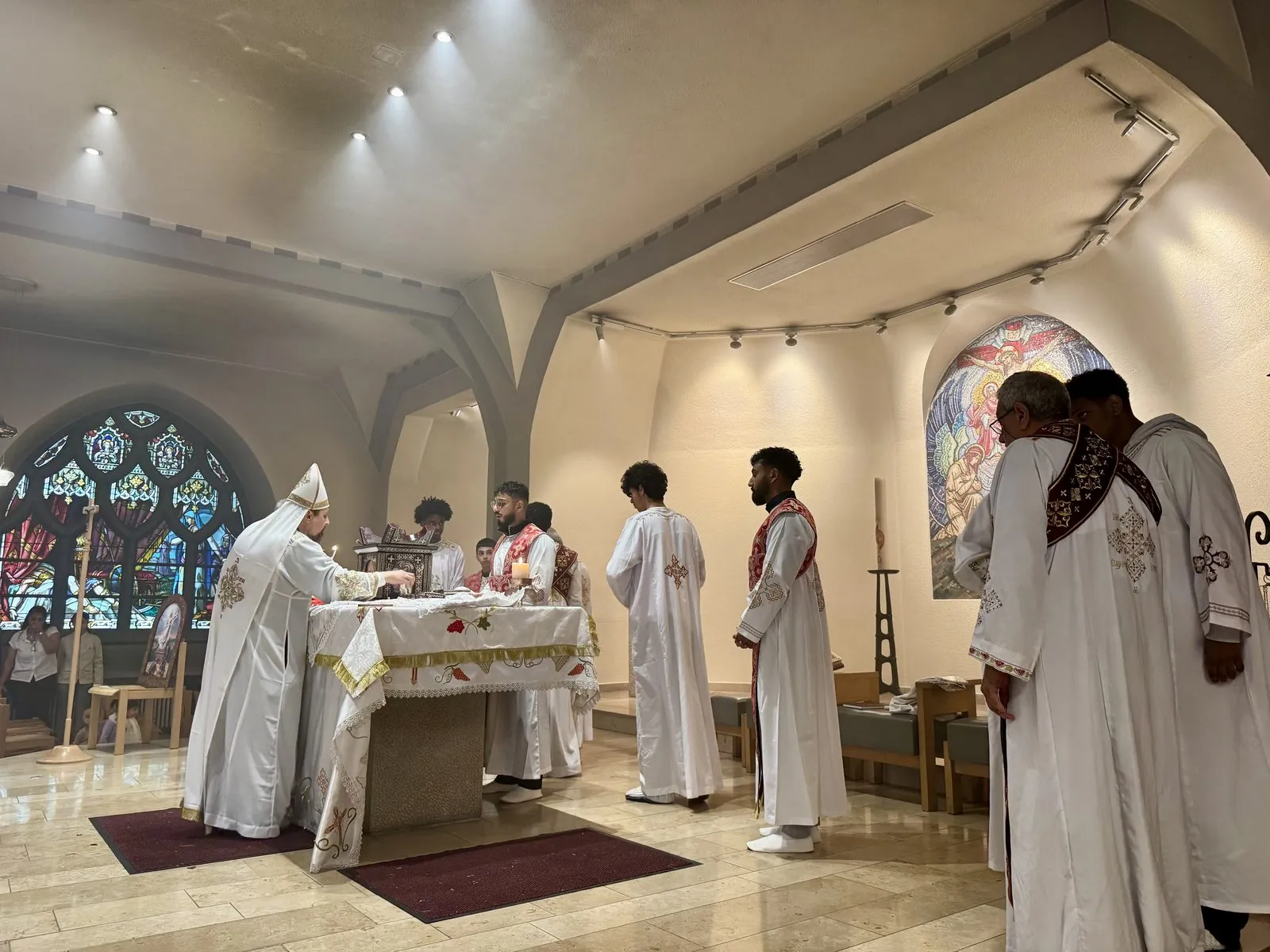
A Coptic service is an experience for all the senses. These five short chapters tell you what you will hear, see and smell, so you know what to expect the first time.
Chapter I
When and how long
We celebrate the Divine Liturgy on the second and fourth Saturday of every month, from 08:30 until about 12:00. On the Friday before, the young people meet from 18:00 to 22:00 for praise, teaching, evening incense and a shared meal.
Three and a half hours sounds long. In practice people come and go: families with small children arrive later, others have to leave early. Nobody minds and nobody notices.
- Saturday08:30–12:00Divine Liturgy, every 2nd and 4th Saturday
- The Friday before18:00–22:00Youth meeting with evening incense
Chapter II
What you will hear
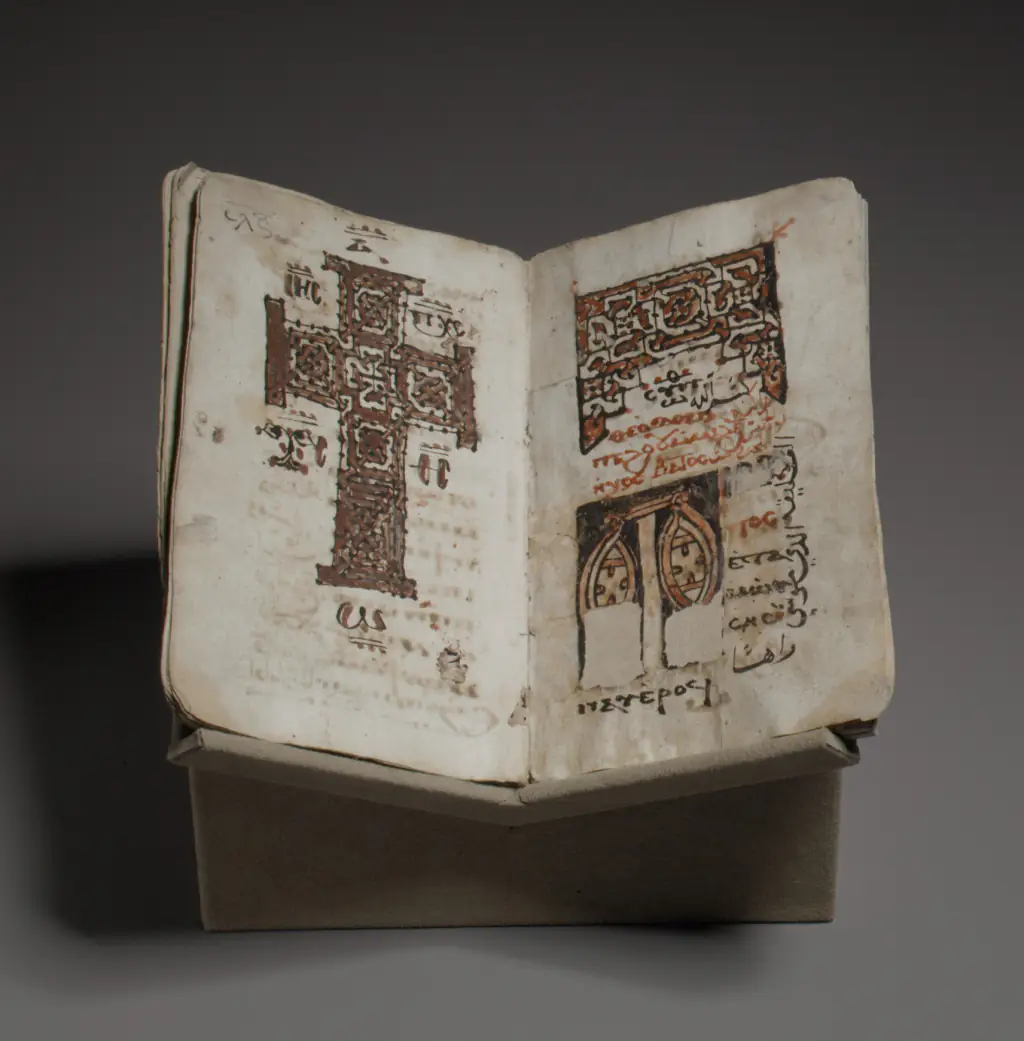
The service is celebrated in several languages. Arabic, German and French alternate, joined by ancient Coptic, the language of Egypt's Christians. The sermon is translated into German, and the whole liturgy is projected on a screen, so you can always see where we are.
Much is sung rather than spoken. The melodies are centuries old and are still passed on by ear. They are accompanied only by cymbals and triangle, no organ, no other instrument.
Chapter III
What you will see and smell
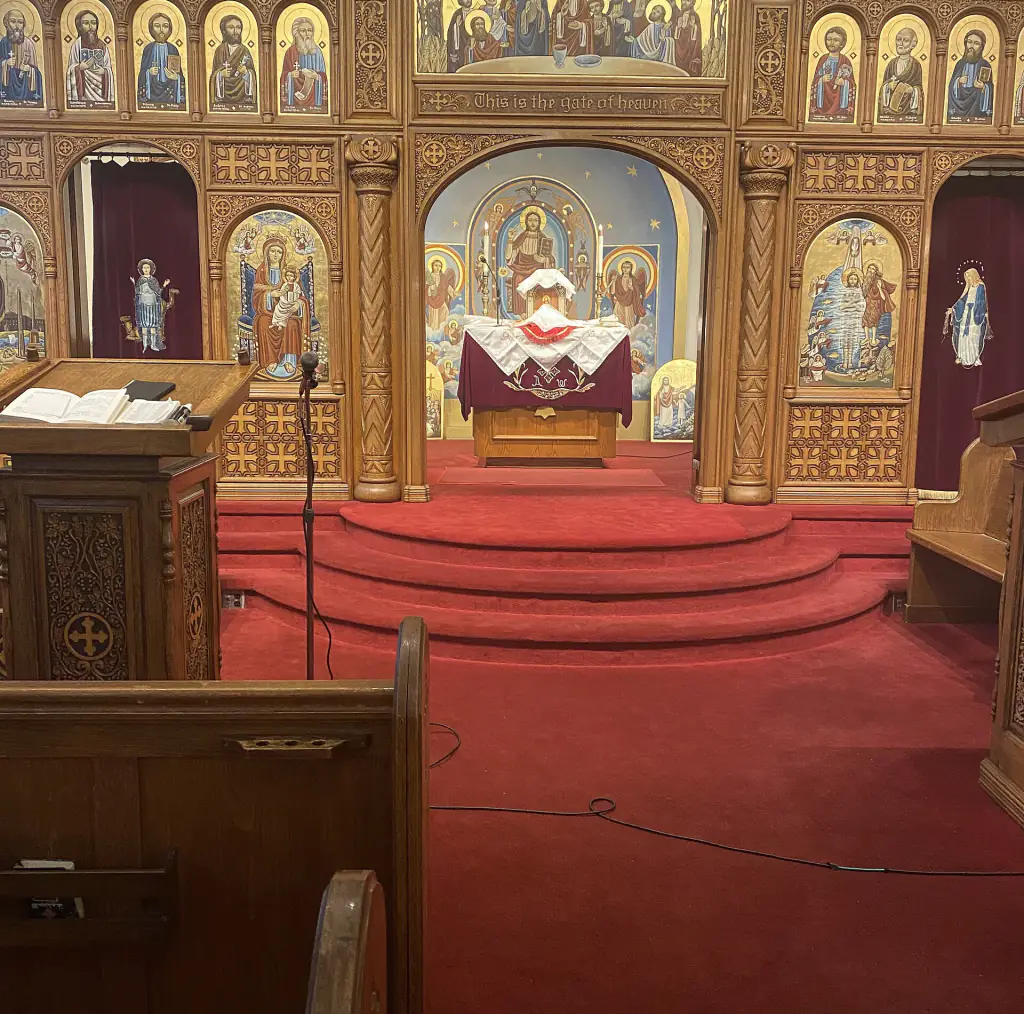
Incense belongs to a Coptic service as much as the chant. It rises several times during the liturgy and stands for prayer ascending to God. If you are sensitive to it, sit further back.
Icons and candles belong to it as well.
Chapter IV
The broad shape
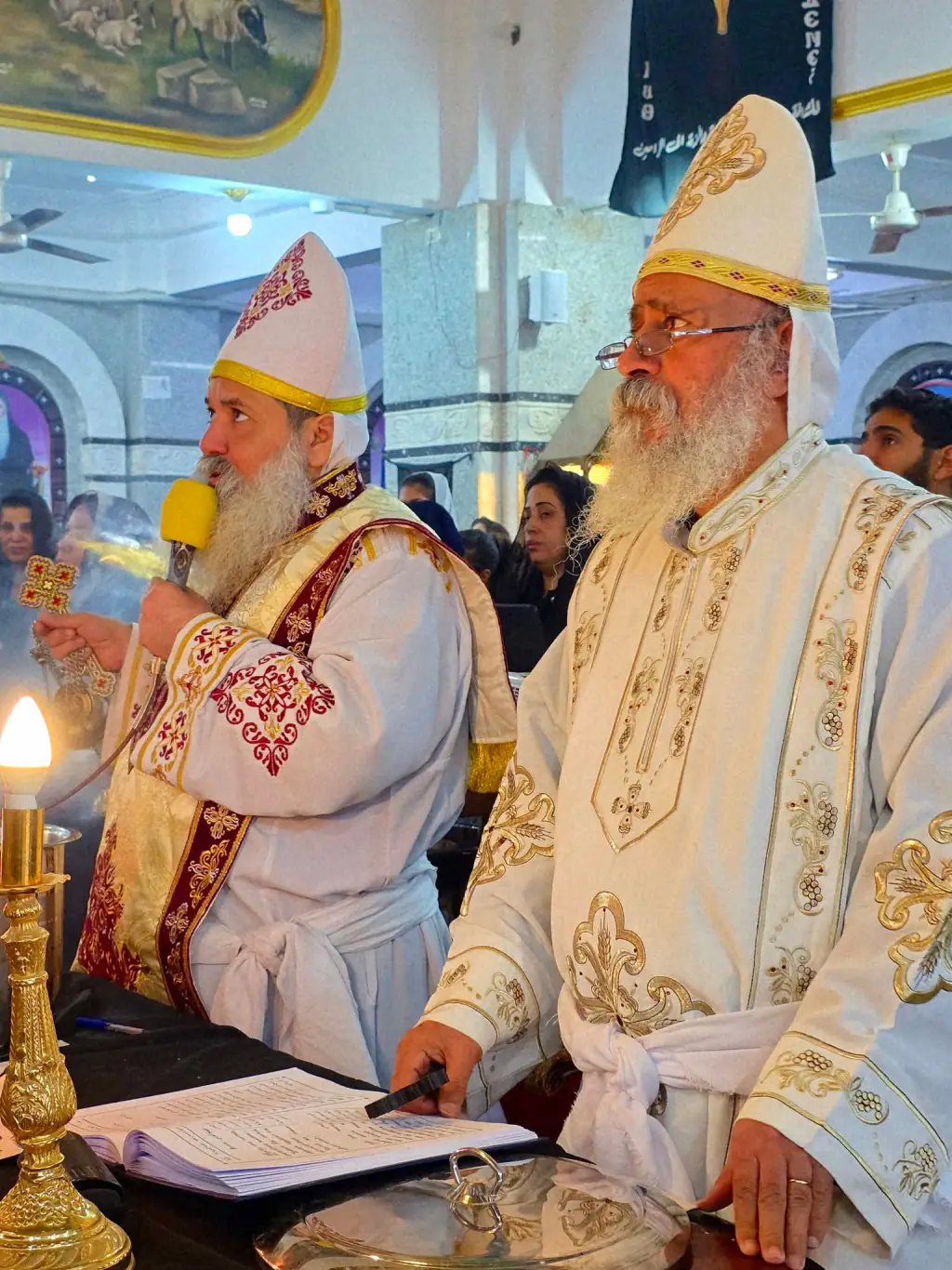
The liturgy begins with prayers and hymns of preparation. Readings from the Bible and the sermon follow. The second part leads to the Eucharist, the heart of the service.
Only those who are baptised and have prepared approach communion. As a guest you simply stay in your seat, which is entirely fine. If you would like to know more, ask us afterwards.
Chapter V
Afterwards: the agape
After every liturgy we lay the table. "Agape" means love, and that is exactly what is shared there: food, conversation and time. It often lasts well into the afternoon.
As a guest you are expressly invited. Nobody eats alone here, and the agape is the moment when you really get to know the parish.
Just come along
No registration and no prior knowledge are needed. The exact dates are in the calendar.
Image credits: Koptischer liturgischer Kodex, Metropolitan Museum of Art, CC0 · Koptische Kirche mit Ikonostase: Foto That Coptic Guy, CC BY-SA 4.0, via Wikimedia Commons · Koptische Priester bei der Liturgie: Foto Beshoy Makram Zaki, CC BY-SA 4.0, via Wikimedia Commons