A story in seven chapters
From Thebes to the Limmat
How saints from Egypt shaped Switzerland, and why the Copts feel at home here.
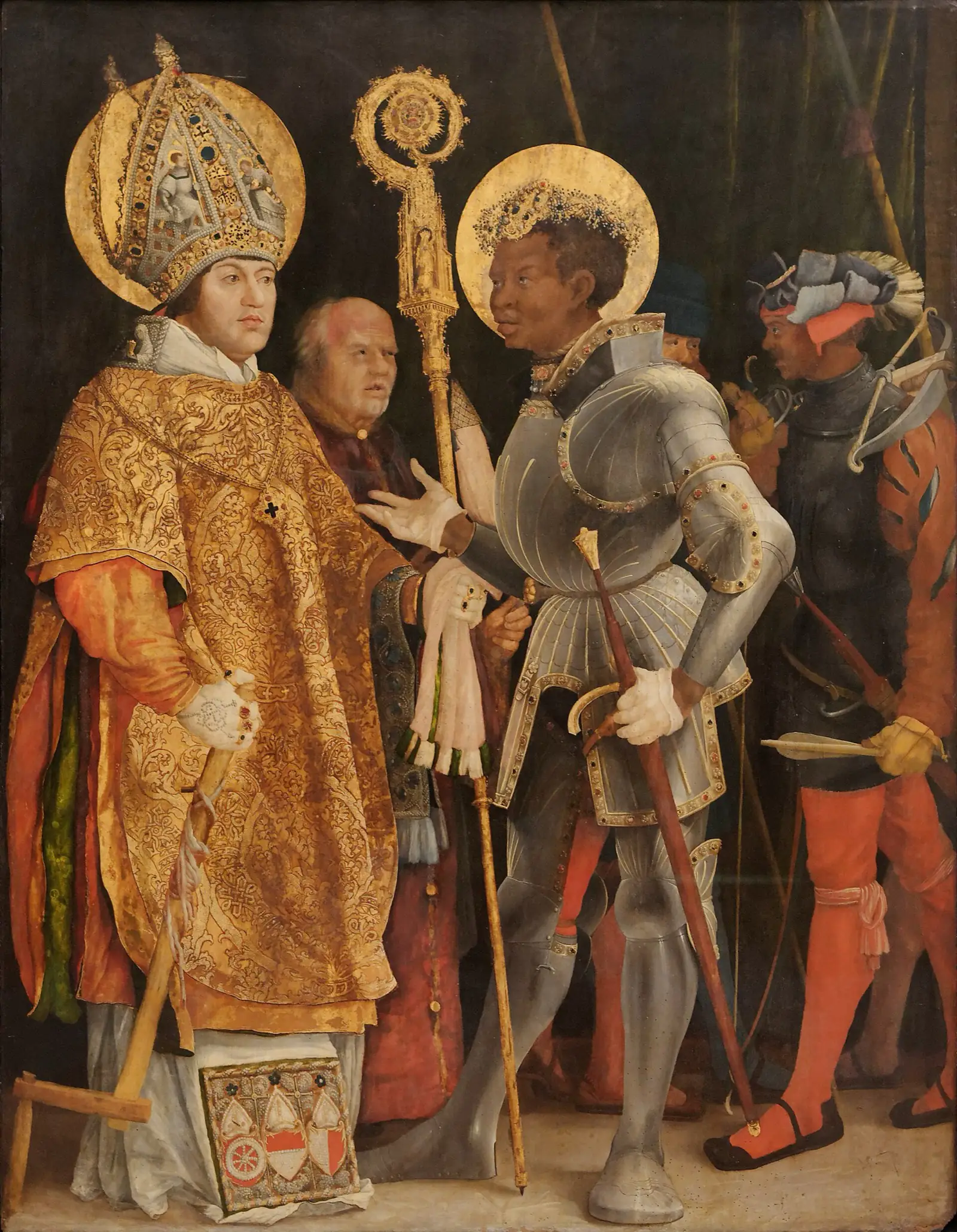
Anyone in Switzerland who goes looking for the roots of Christianity ends up, surprisingly often, in Egypt. The saints after whom churches, towns and a cathedral here are named came, according to tradition, from the Thebaid on the Nile, the land of the Copts. This page tells their story, chapter by chapter.
Chapter I
From Thebes on the Nile
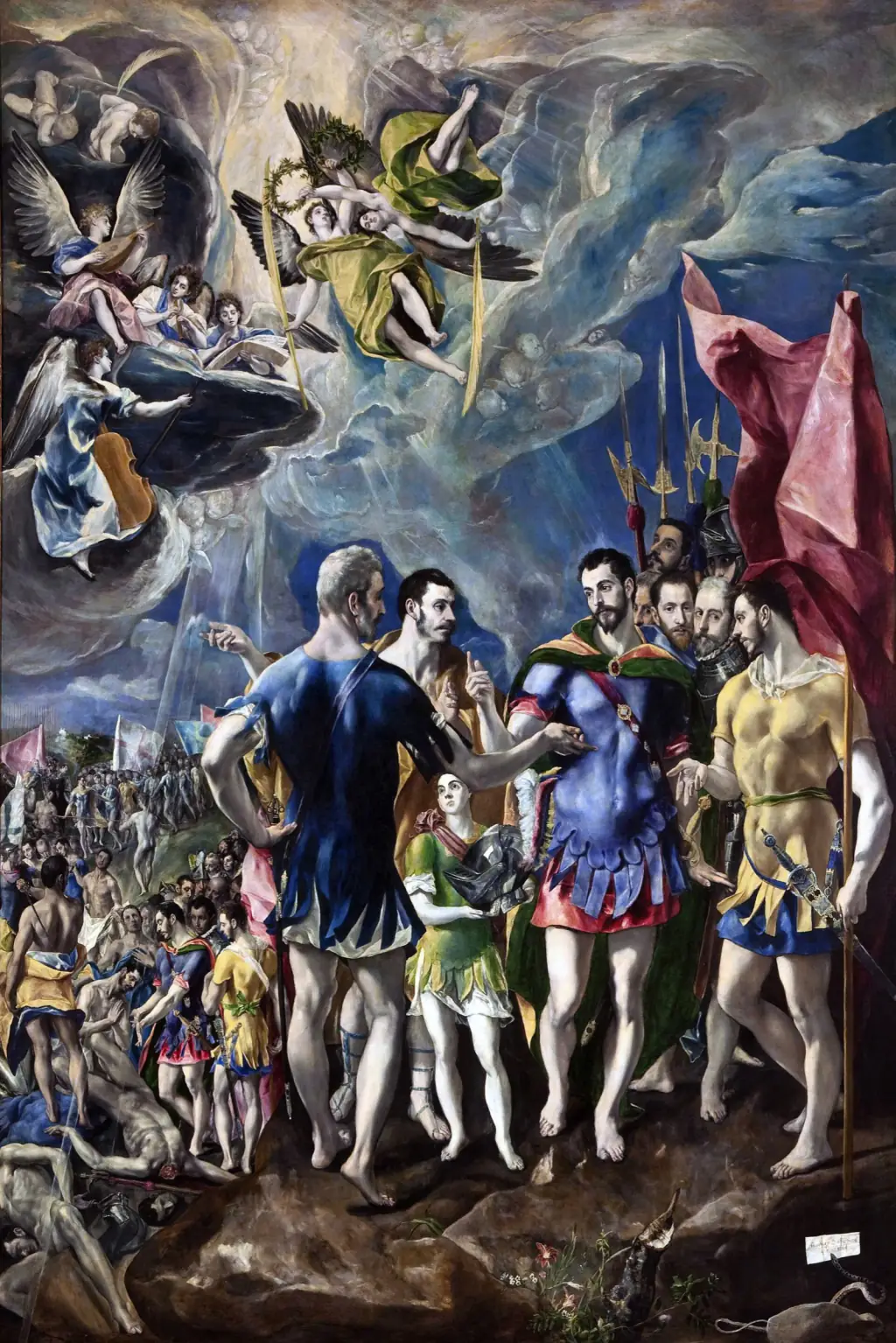
The story begins not in the Alps but on the Nile. In Upper Egypt, in the region of the Thebaid around present-day Luxor, the soldiers who entered Swiss history as the Theban Legion are said, according to tradition, to have been raised: Christians from Egypt, brothers and sisters in faith of today's Copts.
Around the year 300, so runs the account that Bishop Eucherius of Lyon set down around 440, the troops were stationed near Agaunum in the Rhône valley, today's Saint-Maurice in the Valais. Emperor Maximian ordered the soldiers to take part in pagan sacrifices and in the persecution of Christians. They refused. The emperor had them decimated and in the end put every one of them to death.
Whether it all happened exactly like this is disputed among scholars; parts of the story do not fit together, such as the great number of soldiers. What is certain, however, is that the martyrs of Agaunum were already venerated in the 4th century: around 380, Bishop Theodore is said to have found their remains and laid them to rest in a funerary chapel against the rock; an early memoria of this kind has been confirmed by archaeology.
We are your soldiers, Emperor, and yet, as we freely confess, we are servants of God.
After the Passio of Eucherius of Lyon
Chapter II
Saint-Maurice: 1500 years of prayer
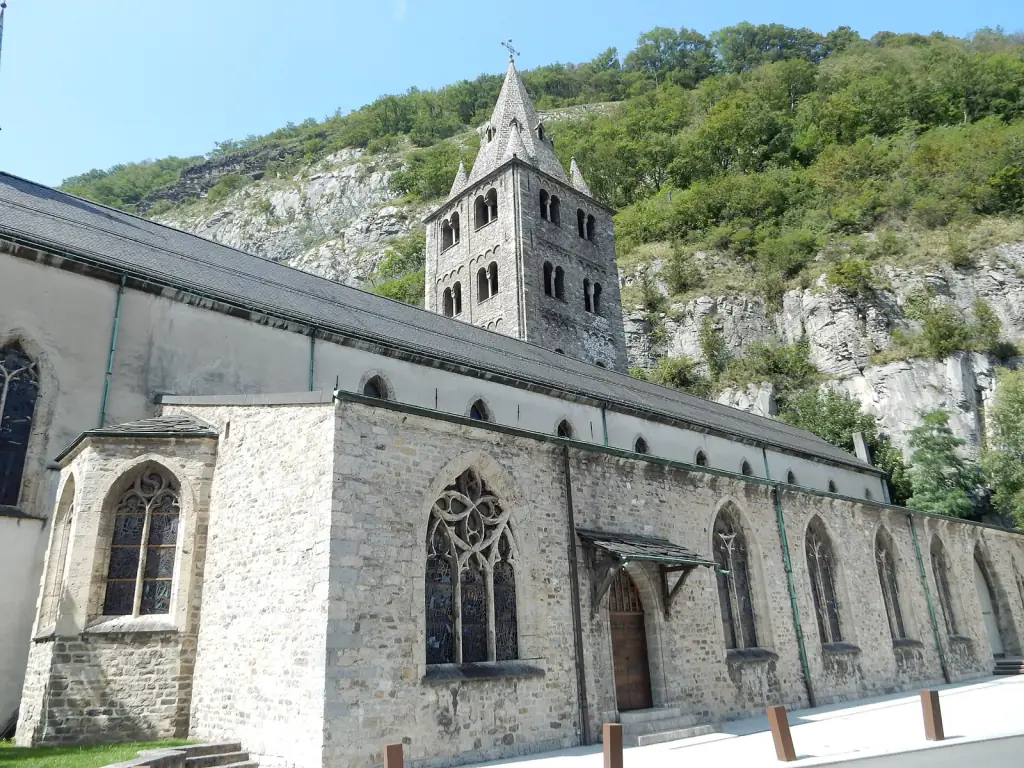
Their leader gave his name to an entire town: Maurice, who in the Valais became Saint-Maurice. Alongside him Eucherius names Exuperius and Candidus, and the veteran Victor.
At the martyrs' tomb, Sigismund, later King of the Burgundians, founded an abbey in the year 515. There he introduced a custom from the Christian East, the “laus perennis”, the perpetual praise: several choirs of monks took turns, so that the prayer never fell silent, by day or by night.
The abbey regards itself as the oldest continuously inhabited monastery in the West; there has been prayer here every day since 515. In 2014 and 2015 it celebrated its 1500th anniversary. Its treasury still holds the 12th-century shrines of St Maurice and St Sigismund.
Chapter III
Zurich: Felix, Regula and Exuperantius
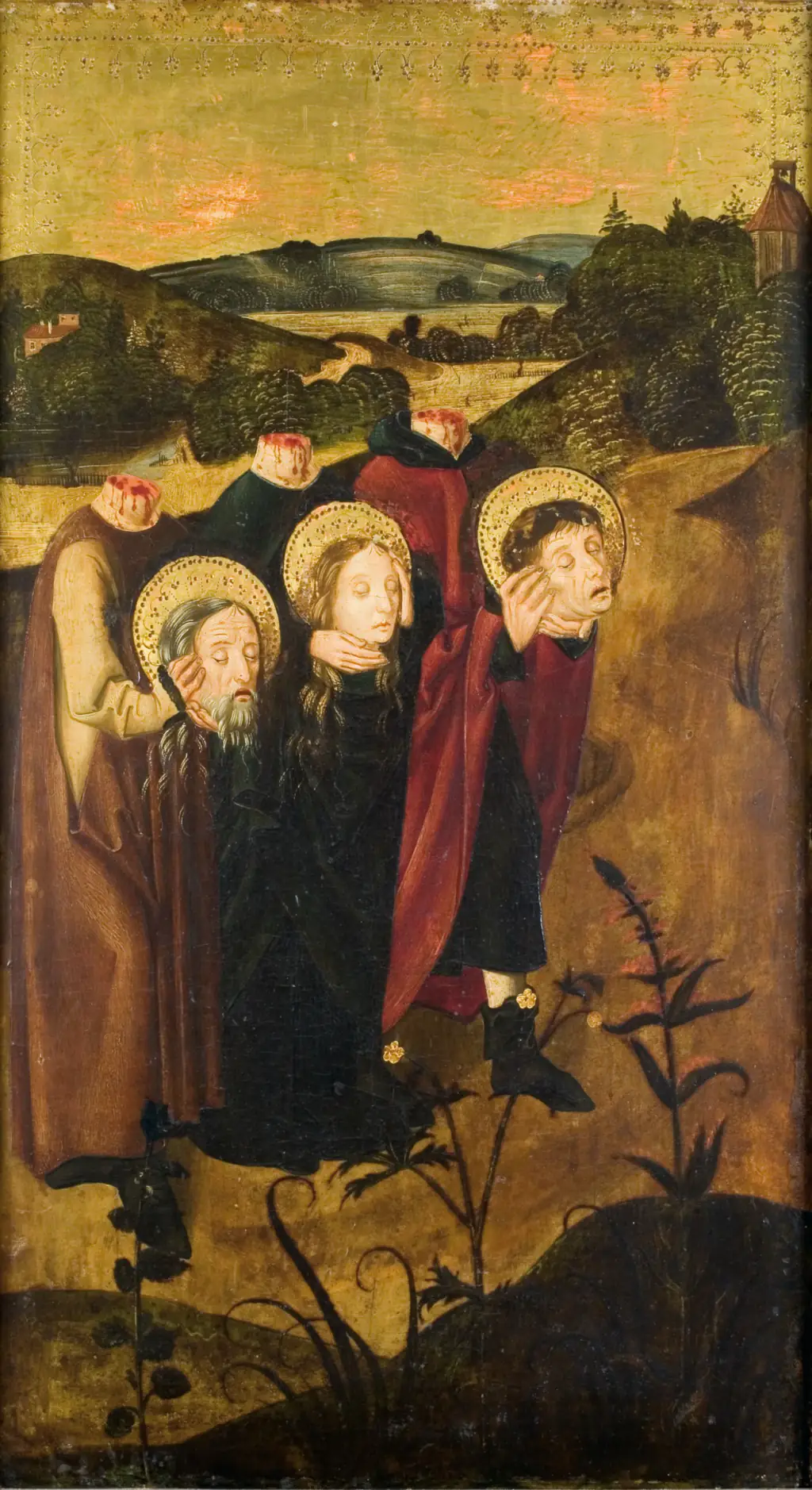
According to tradition, two siblings from the legion managed to escape: Felix and his sister Regula. They fled through the Glarus country as far as the Limmat. In Zurich they were captured, tortured and beheaded. The legend tells that they then picked up their heads and walked forty paces, to the place where they wished to be buried.
The oldest witness to this story is a Passio from the late 8th century. In the 9th century the Grossmünster rose over the venerated grave; the Fraumünster and the Wasserkirche were also built in honour of the two.
In the 13th century Exuperantius joined them as the city's third patron saint. Ever since, the three have appeared on Zurich's seals and coins, holding their heads in their hands. Their feast day is 11 September.
Chapter IV
Solothurn: Ursus and Victor
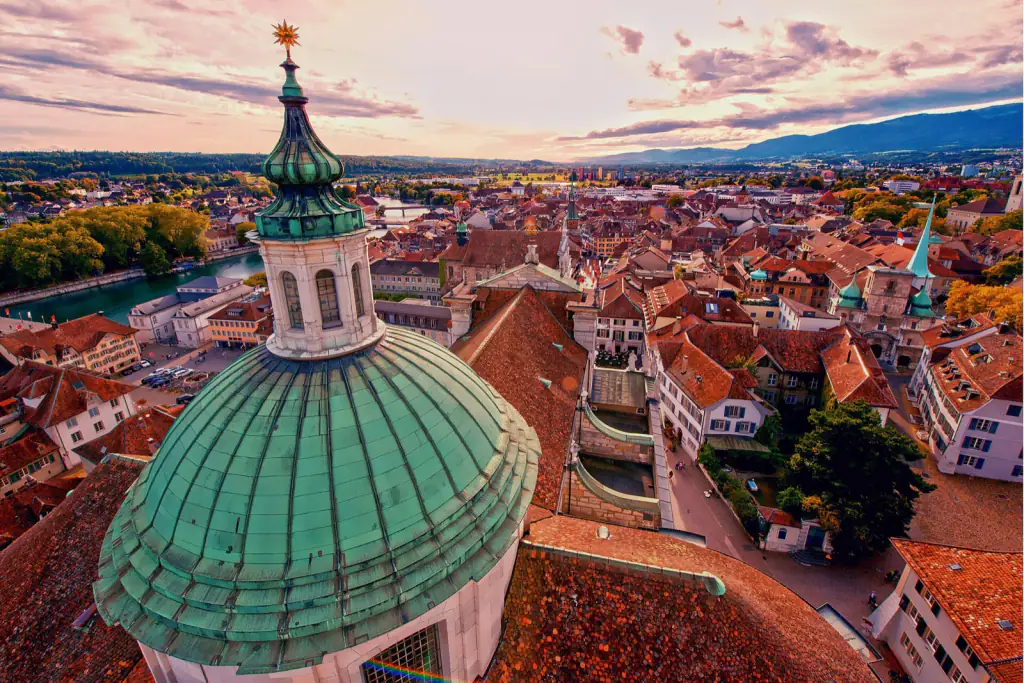
Further north, on the Aare, Solothurn tells of two more Thebans: Ursus and Victor. Eucherius already reports that it was said they too had belonged to the legion and suffered martyrdom in Solothurn.
Their veneration in Solothurn can be traced in writing and in stone from the 5th century onwards. According to the chronicle of Fredegar, the Burgundian princess Sedeleuba had a church of St Victor built outside Geneva around 500 and Victor's remains brought there; Ursus stayed in Solothurn. The St Ursus Cathedral is named after him, built from 1762 to 1773 and the cathedral of the Diocese of Basel since 1828. Their feast day is 30 September.
Chapter V
Verena: the woman with the jug and the comb
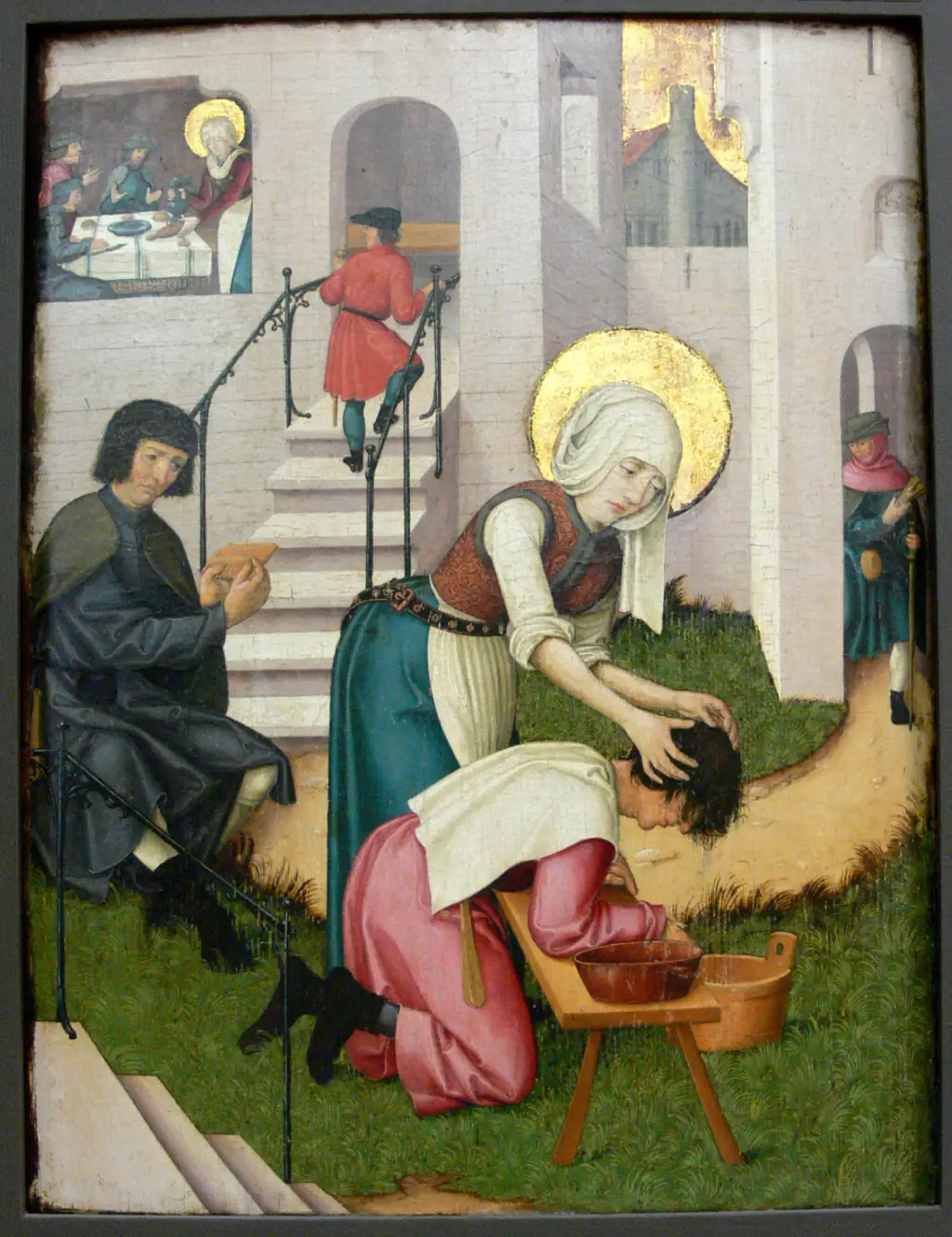
Along with the soldiers, so tradition has it, a young woman from a Theban family also came to the West: Verena. She visited the martyrs' graves in Milan and Agaunum and then remained in the land. For a time she lived in seclusion near Solothurn, where the hermitage in the Verena Gorge still keeps her memory alive.
Later she moved to Zurzach on the Rhine. According to the legend, she cared for the sick and the poor there, washing them and combing their hair. That is why the pictures show her with a jug and a comb. It was also in Zurzach, according to tradition, that she died, probably around the middle of the 4th century.
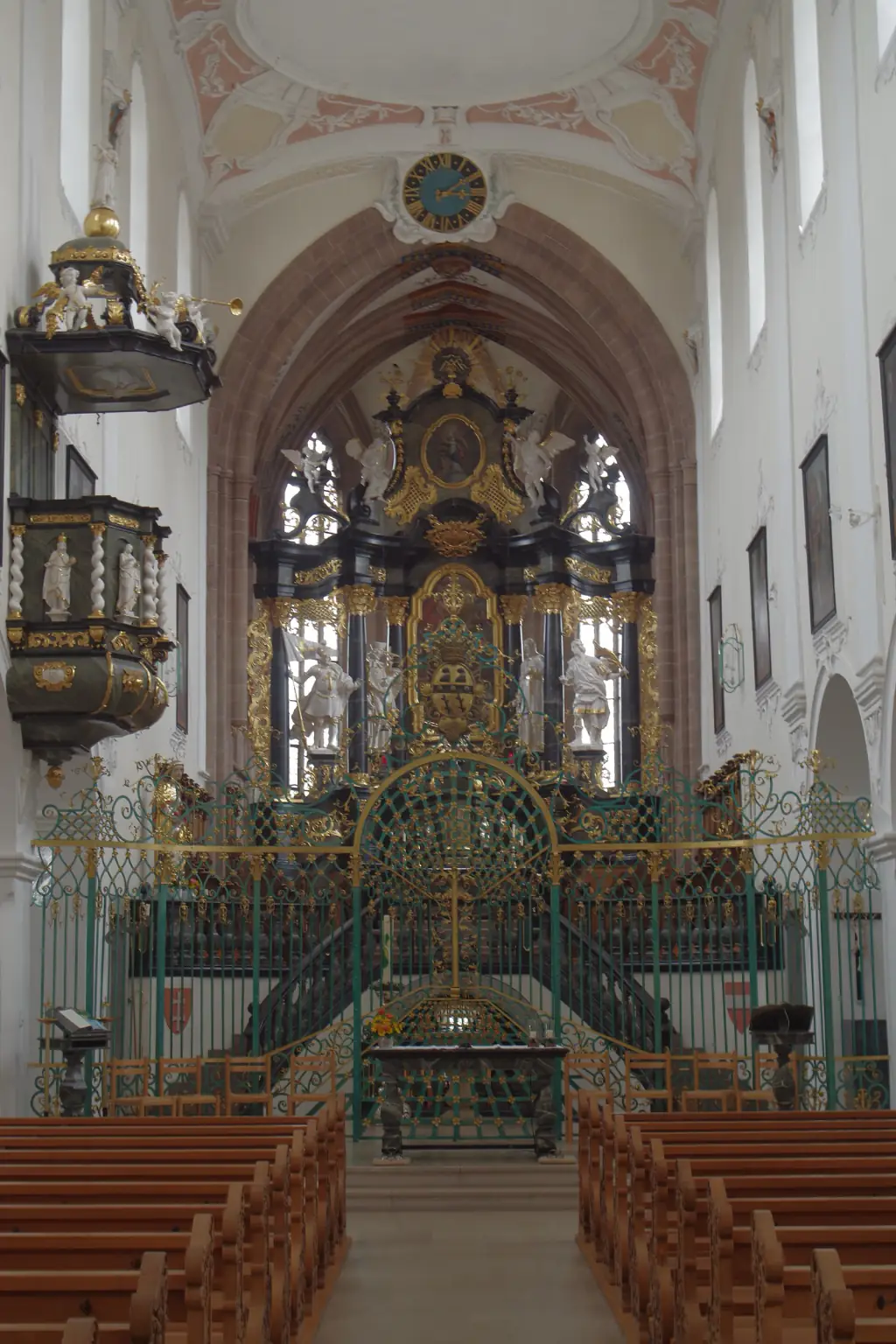
The oldest account of her life was written around 887 on the island of Reichenau. Excavations in Zurzach have revealed a baptismal church inside the Roman fort and a 5th-century memorial church on the Roman road, traces of an early Christian community. Over her grave today stands the Verena Minster. In the West her feast is kept on 1 September, among the Copts on 4 Tout, usually 14 September.
Chapter VI
Bridges between the Rhine and the Nile
For a long time Verena was hardly known in Egypt. That changed when Copts and Swiss found one another. In the autumn of 1986 an ecumenical group from Zurzach brought a relic of St Verena to Cairo. At the airport the group was welcomed by Bishop Serapion, who had cared for the Coptic parishes in Switzerland from 1982; at an audience with Pope Shenouda III they handed over the relic. In 1994 Pope Shenouda III consecrated a church in Cairo in the name of St Maurice and St Verena.
In 2004 Pope Shenouda III consecrated the first Coptic Orthodox church in Switzerland, in Meyrin near Geneva, and then visited Saint-Maurice to venerate the relics of St Maurice and his companions. In 2007 Zurzach gave a relic of St Verena for a new church in Port Said, and from Port Said a Coptic icon of St Verena came to the Rhine. In 2012 the Abbey of Saint-Maurice presented relics of Theban martyrs for a church in Luxor, in the heart of the ancient Thebaid.
Pope Tawadros II came as well: he visited the Verena Minster in Zurzach and, in 2014, the Abbey of Saint-Maurice for its jubilee. On 14 May 2019 he consecrated the Church of the Holy Virgin Mary and St Verena in Grafstal, the first consecrated Coptic church in German-speaking Switzerland.
Chapter VII
Today: the circle closes
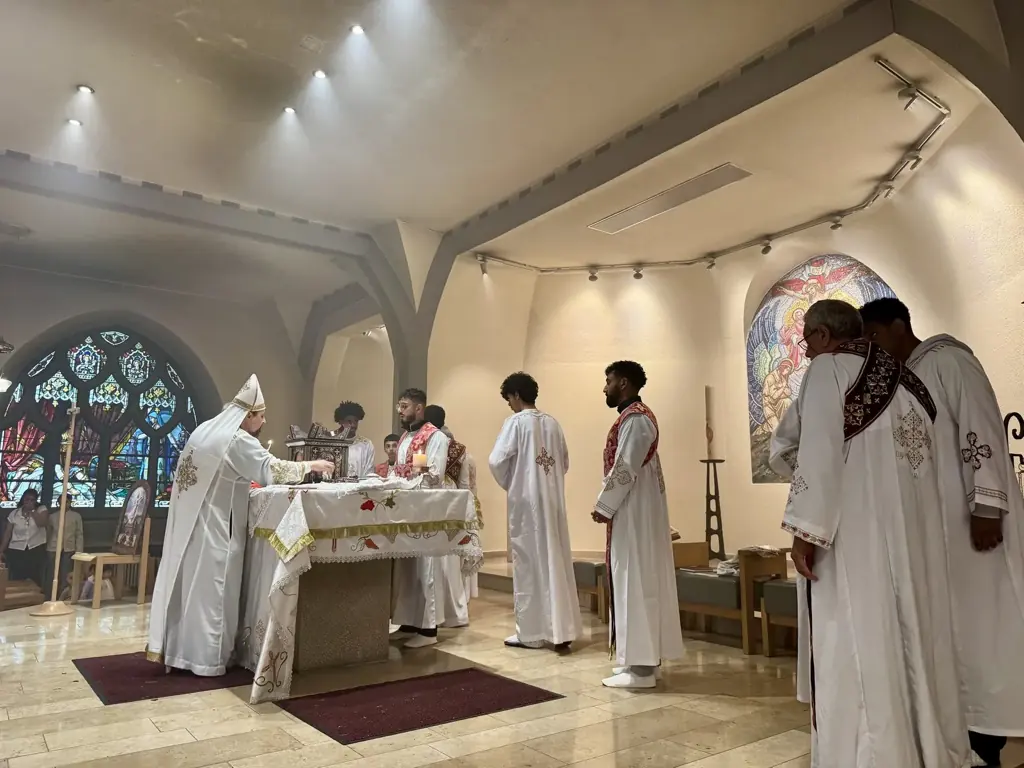
The first Copts came to Switzerland in the 1960s, at first mostly as students; in 1962 they met in Zurich for their first gatherings. Small circles grew into parishes, today several hundred families across Switzerland.
In church terms the country is divided in two: the parishes of German-speaking Switzerland belong to the Diocese of Austria and German-speaking Switzerland under Bishop Anba Gabriel in Vienna, the parishes of French-speaking Switzerland to the Diocese of French-speaking Switzerland and Southern France under Bishop Anba Louka in Geneva. Many parishes are guests in Catholic and Reformed churches, as we are in Biel, in the church of St Maria.
When Copts today make a pilgrimage to Saint-Maurice, to Zurzach or to the banks of the Limmat, they are not visiting foreign saints. They are visiting brothers and sisters in faith from their own homeland, who, according to tradition, gave their lives for Christ here more than 1700 years ago. In every Divine Liturgy we celebrate here, that faith lives on.
Timeline
From Agaunum to Grafstal
- c. 300Martyrdom of the Theban Legion near Agaunum, according to tradition
- c. 380Bishop Theodore buries the remains of the martyrs at Agaunum
- c. 440Eucherius of Lyon writes the Passio of the martyrs of Agaunum
- 5th c.Veneration of Ursus and Victor in Solothurn; early churches in Zurzach
- 515Sigismund founds the Abbey of Saint-Maurice
- 9th c.The Grossmünster rises over the grave of Felix and Regula
- 1962First gatherings of Copts in Zurich
- 1986A relic of St Verena from Zurzach comes to Cairo
- 1994Pope Shenouda III consecrates the Church of St Maurice and St Verena in Cairo
- 2004Pope Shenouda III consecrates the first Coptic church in Switzerland in Meyrin and visits Saint-Maurice
- 2006The Zurich parish acquires a church in Dietlikon and dedicates it to Saints Mark and Maurice
- 2012Relics of the Thebans from Saint-Maurice for a church in Luxor
- 2014Pope Tawadros II visits the Abbey of Saint-Maurice for its 1500th anniversary
- 2019Pope Tawadros II consecrates the Church of the Holy Virgin Mary and St Verena in Grafstal
The story goes on
You can celebrate it with us: at one of our Divine Liturgies in Biel, or in one of the Coptic parishes across Switzerland.
Sources: Historical Dictionary of Switzerland, Abbey of Saint-Maurice, Schweizerische Kirchenzeitung, kath.ch and cath.ch. Where tradition tells a story and history is silent, we say so.
Image credits: Matthias Grünewald, Begegnung der Heiligen Erasmus und Mauritius, gemeinfrei, via Wikimedia Commons · El Greco, Martyrium des heiligen Mauritius, gemeinfrei, via Wikimedia Commons · Abteikirche Saint-Maurice: Foto Paul Bissegger, CC BY-SA 4.0, via Wikimedia Commons · Meister des Winkler-Epitaphs, Felix, Regula und Exuperantius, gemeinfrei, via Wikimedia Commons · St.-Ursen-Kathedrale: Foto Countdan, CC BY-SA 4.0, via Wikimedia Commons · Barmherzigkeit der heiligen Verena, Tafelbild 1524, Foto Andreas Praefcke, gemeinfrei, via Wikimedia Commons · Verenamünster Bad Zurzach: Foto Buchstapler, CC BY-SA 4.0, via Wikimedia Commons